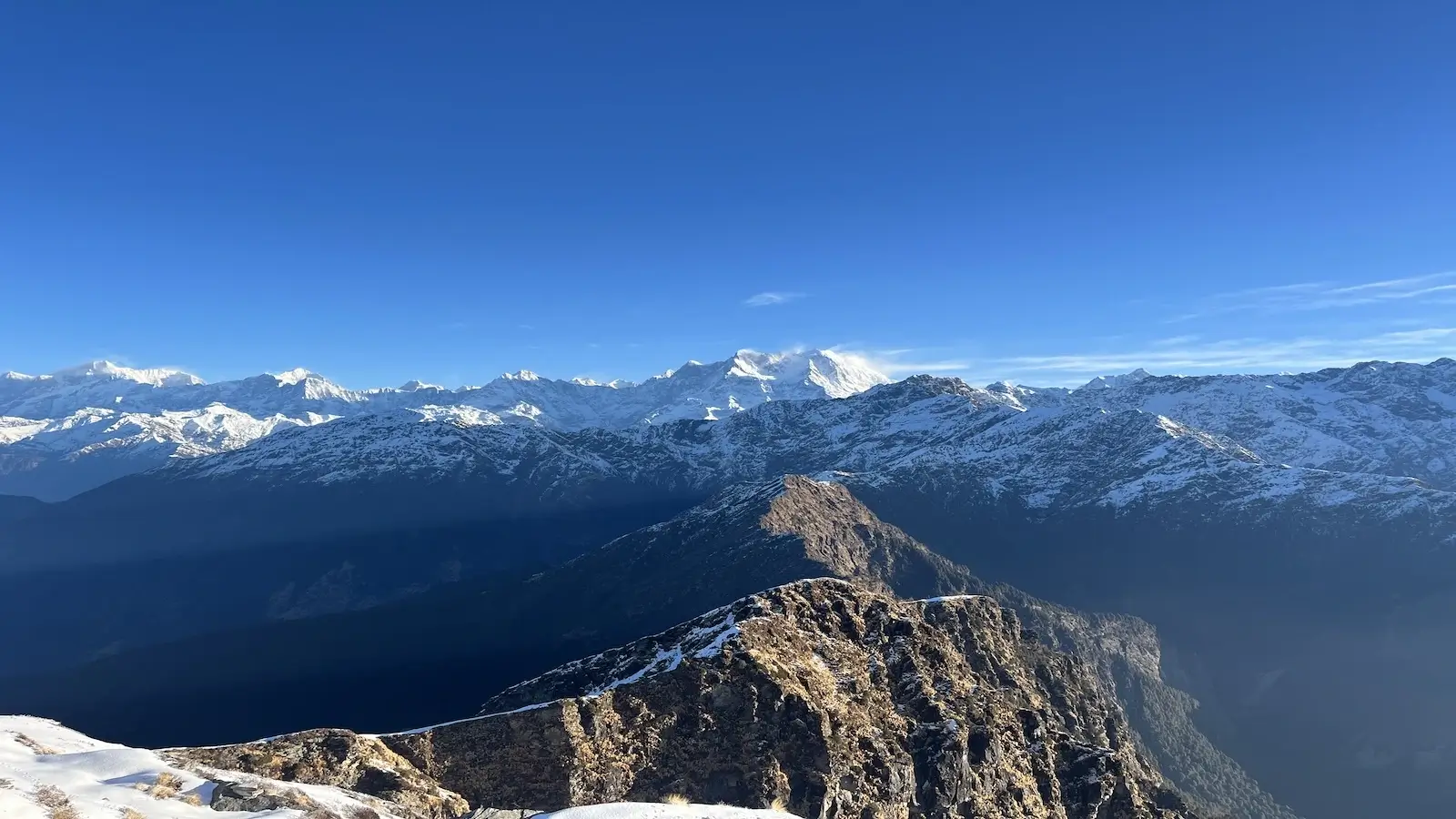
Standing at 3,637 metres on the Chandrashila summit at 5:30 in the morning, with the entire Himalayan arc spread out in front of you — Nanda Devi, Trisul, Chaukhamba, Kedarnath Peak — is one of those experiences that genuinely resets your perspective. The pre-dawn cold bites, your legs are tired from two hours on a steep trail, and then the sun cracks the horizon and lights up everything gold.
I did this trek solo in late March 2025, starting from Solan in Himachal Pradesh. This guide covers everything — transport, stay, the trail, costs, and the small details that nobody tells you until you’re already on the mountain.
Why Tungnath & Chandrashila?
Tungnath is the highest Shiva temple in the world, sitting at 3,680m. Chandrashila, the rocky peak just 1.5 km beyond, adds another 400m and delivers one of the most expansive 360-degree Himalayan panoramas accessible on a short trek. The base camp is Chopta — a quiet, no-frills hamlet in Uttarakhand’s Rudraprayag district.
What makes this trek special:
- Accessible: No permits for foreign nationals, no complex logistics
- Short but rewarding: 5 km one way from Chopta, doable in 3–4 hours
- Spectacular views: Nanda Devi, Trisul, Chaukhamba, Kedarnath range all visible on a clear day
- Low competition: Far fewer crowds than Kedarkantha or Triund, especially off-peak
How to Reach Chopta
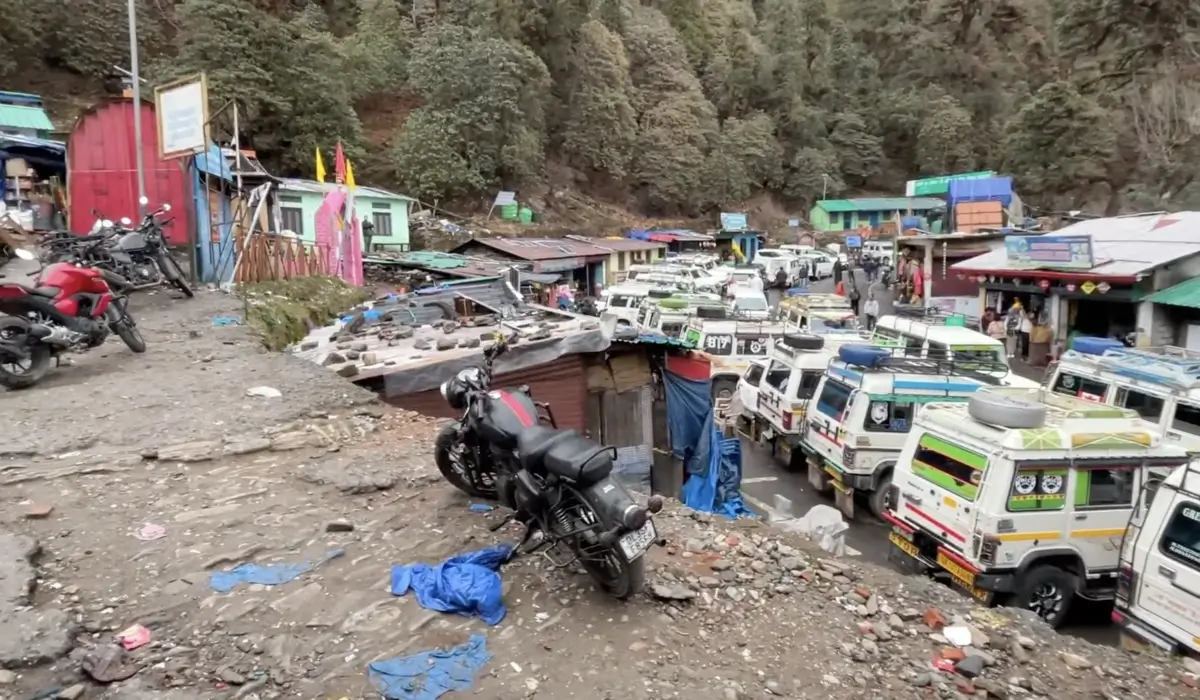
From Solan / Shimla (Himachal Pradesh)
Take an overnight HRTC bus from Solan to Haridwar at 9:30 PM (₹500). You reach Haridwar around 5:00–5:15 AM, giving you just enough time to freshen up and grab breakfast before the next leg.
From Haridwar to Ukhimath
From Haridwar bus stand, catch the 5:30 AM state bus to Ukhimath (₹460). This is an ordinary bus — no AC, no frills, but cheap and reliable. Buses to this route run until around 10 AM, so don’t sleep in. The journey takes roughly 8–8.5 hours; you reach Ukhimath around 2:00 PM.
Important tip: Have a proper meal at Ukhimath. This is the last stop with normal food prices. Everything at Chopta costs significantly more.
From Ukhimath to Chopta
Take a shared taxi from Ukhimath to Chopta — ₹200 per person, about 1 hour. There are also campsites before you reach Chopta if you want to break the journey.
From Delhi
Take an overnight bus or train to Haridwar/Rishikesh, then follow the Haridwar route above. Budget ₹400–700 for the Delhi–Haridwar leg depending on bus or train class.
Where to Stay at Chopta
Chopta has around 5–6 guesthouses and tent camps clustered along the road. Don’t expect luxury — this is a high-altitude base camp village.
A few things to know before you book:
- Electricity is only available from 6 PM to 6 AM. Plan accordingly.
- Water is limited. Use what you need, don’t waste it.
- It’s cold — even in late March, nights dip well below comfortable. Pack accordingly.
- Rooms fill up on weekends and peak season (May–June, Sep–Oct). Call ahead if you’re travelling then.
I paid ₹1,500 for a single large room — the smaller ones were taken. Sharing options are available: roughly ₹2,000 for three people sharing. I chose the private room for luggage safety and privacy, which I’d recommend if you’re travelling solo.
There are also campsite options just before Chopta for those who want the full outdoors experience.
Food at Chopta
Five to six dhabas serve simple meals — breakfast, lunch, and dinner. Nothing fancy, but hot food and chai are available. Eat a good dinner the night before your trek and pick up any snacks or supplies you need here. You won’t find a shop on the trail.
The Trek: Chopta to Chandrashila Summit
Distance: 3.5 km Chopta → Tungnath Temple + 1.5 km Temple → Chandrashila Peak = 5 km one way
Total time (up): 2–2.5 hours at a steady pace (3–4 hours if you’re new to trekking)
Difficulty: Easy to moderate
Starting Out (2:00–3:15 AM)
I woke up at 2:00 AM, got ready, and started the trek at 3:15 AM. If you want the sunrise at Chandrashila, this is the timing. Don’t leave later than 3:30 AM.
Right at the trailhead, there’s a check post / ticket counter:
- Students: ₹100
- Others: ₹200
Keep your ticket — you may be checked on the way.
The first section of the trail is a well-defined stone path through dense Buransh (rhododendron) forest. In late March, the bright red Buransh flowers are in bloom — one of the most beautiful parts of the walk. No snow here, just a steady uphill climb.
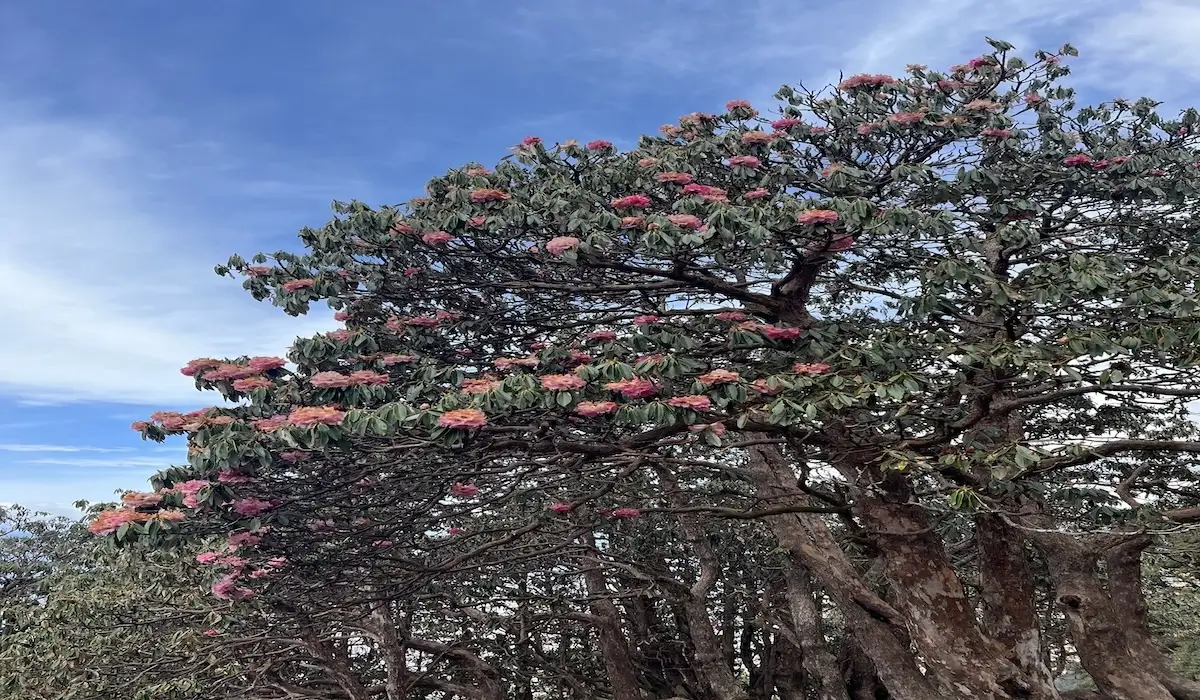
The trail is steep but manageable. I didn’t stop at all and kept a steady pace. For most people, taking short breaks every 30–40 minutes is a good strategy.
Approaching Tungnath Temple
As you gain altitude and the forest thins, snow begins to appear on the trail. It’s not heavy in the lower section, but it increases as you near the temple. By the time you reach Tungnath, you’re walking through proper snow.
Tungnath Temple (3,680m) is currently closed (seasonal closure in winter/early spring). Even so, the temple and its surroundings at this altitude — surrounded by snow, in the dark with just your headlamp — feel otherworldly.
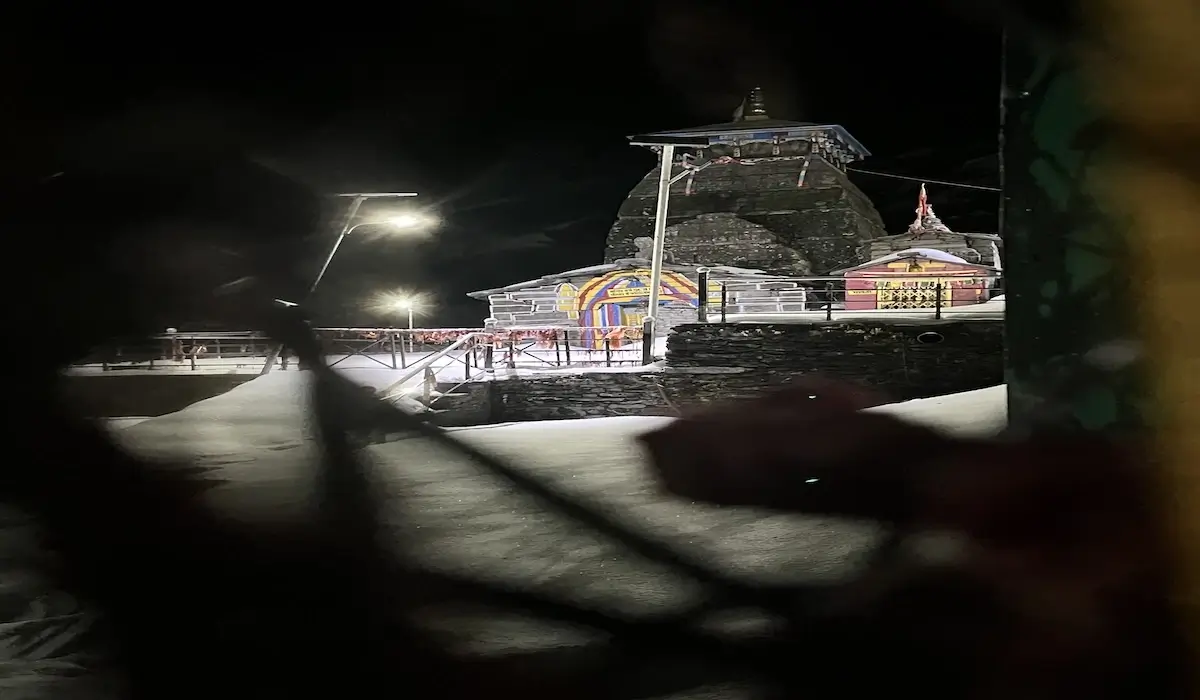
This is also where trekking poles and spikes become genuinely useful. Many people I saw had microspikes for this section. I didn’t carry them and managed, but the trail here can be slippery. If you’re trekking in winter or early spring, consider carrying spikes.
Tungnath to Chandrashila (The Final 1.5 km)
This is the most important section to navigate carefully if you’re trekking in the dark — which you will be if you started at 3:15 AM.
The critical junction: After the temple, there’s a fork. A cross mark is painted on a rock to indicate the path. Take LEFT. Do not go right. The left path leads to Chandrashila. This is especially important at night when visibility is low.
The snow on this stretch is 2–3 feet deep in late March. You’re essentially walking on packed snow the entire way up. Take it slow, test your footing, and you’ll be fine without spikes — but they do help.
At the Summit (5:30 AM)
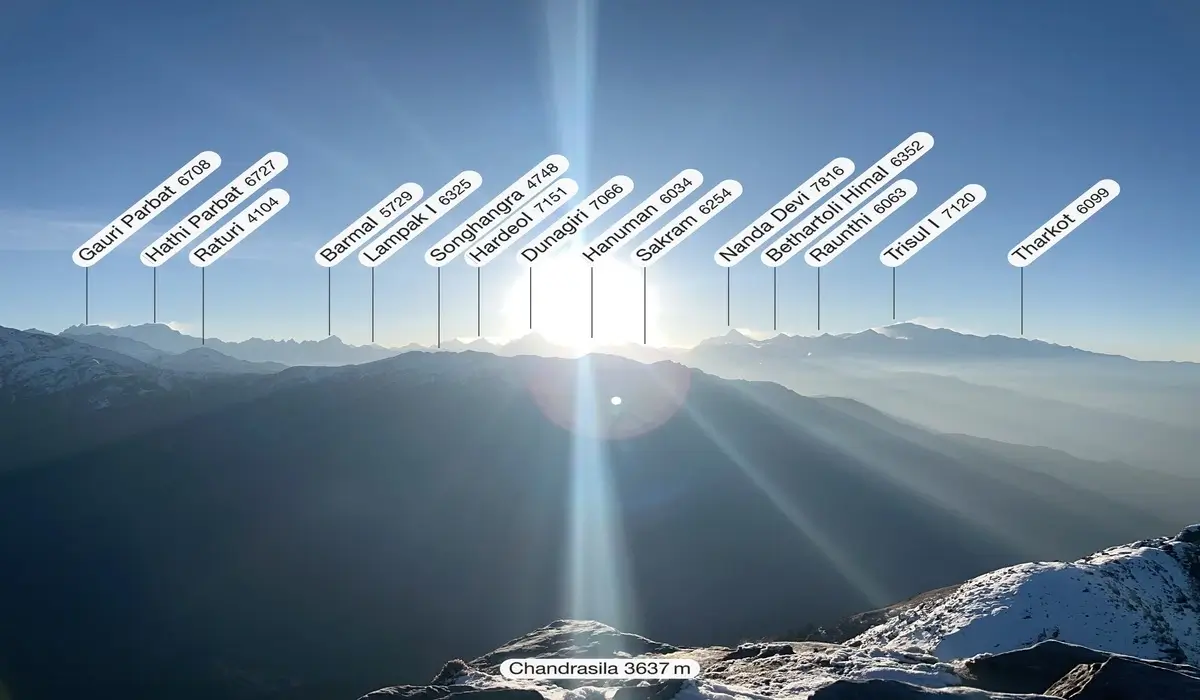
I reached the Chandrashila summit at 5:30 AM. Sunrise was at 6:15 AM.
Those 45 minutes at the top, waiting for the sun, are among the best I’ve spent on any trek. The sky transitions from deep black to violet to orange, and one by one the peaks reveal themselves across a full 360-degree arc:
- Kedarnath Main (6,940m)
- Satopanth (7,075m)
- Janhukut (6,805m)
- Bhagirathi 1 (6,856m)
- Chaukhamba IV
- Gangotri III (6,632m)
- Jaonli (6,632m)
- Shastru (5,126m)
The 360-degree view is unobstructed. There’s a small temple at the summit. On a clear day, you can see peaks stretching across the entire Garhwal Himalaya.
I met another trekker at the summit — one of those chance encounters that only happen in the mountains. We shared the sunrise together before heading our separate ways. Even trekking solo, you’re never entirely alone up here.
A few dogs had accompanied trekkers all the way to the top. Turns out even they came for the view.
On responsible trekking: Me and the person I met at the summit made sure to carry all waste back down. Please do the same. Chandrashila is one of the most pristine summits in Uttarakhand — let’s keep it that way.
The Descent
Descend the same route. The snow section requires careful footing on the way down — take your time. Allow 2–2.5 hours back to Chopta. By 10–11 AM you should be back at base.
Getting Back: Chopta to Rishikesh
Shared taxis from Chopta to Rishikesh are available and cost around ₹1,000 per person. The journey takes approximately 8 hours. From Rishikesh or Haridwar, you can catch onward buses or trains to your destination.
What to Carry
Essentials:
- Warm layers — thermal base layer, fleece, windproof jacket
- Gloves and a warm hat (the summit at 3,637m before sunrise is bitterly cold)
- Headlamp with spare batteries (you’re starting in total darkness)
- Water — carry at least 1.5 litres from Chopta
- Snacks for the trail — energy bars, dry fruits, biscuits
Optional but recommended:
- Microspikes / crampons for the snow section (especially Feb–April)
- Trekking poles — genuinely helpful on the steep descent
- Sunscreen and sunglasses for the return in daylight
Leave behind:
- Anything heavy you don’t need on the trail — leave bags at the guesthouse
Best Time to Visit
| Season | Conditions | Notes |
|---|---|---|
| May – June | Clear skies, mild temperatures | Best for views, busiest season |
| Sep – Nov | Post-monsoon clarity, cooler | Excellent visibility, fewer crowds |
| Dec – Feb | Heavy snow, challenging access | For experienced winter trekkers only |
| Mar – Apr | Snow on upper trail, cold nights | Fewer tourists, Buransh in full bloom |
I went in late March and conditions were excellent — snow added to the experience without being dangerous, and the trail was quiet.
Full Cost Breakdown
| Item | Cost |
|---|---|
| Solan → Haridwar (HRTC bus) | ₹500 |
| Haridwar → Ukhimath (state bus) | ₹460 |
| Ukhimath → Chopta (shared taxi) | ₹200 |
| Guesthouse at Chopta (1 night) | ₹1,500 |
| Trek entry fee | ₹200 |
| Food (2 days at Chopta + en route) | ₹700–1,000 |
| Chopta → Rishikesh (shared taxi) | ₹1,000 |
| Total | ₹4,560–5,000 |
From Delhi, add approximately ₹500–700 for the overnight bus/train to Haridwar. Total from Delhi: roughly ₹5,500–6,000.
Quick Tips
- Start no later than 3:30 AM if you want to reach the summit for sunrise. The sunrise is the whole point.
- Stock up at Ukhimath — food and supplies are noticeably more expensive at Chopta.
- At the junction after Tungnath temple, take LEFT (look for the cross painted on a rock). Do not go right, especially in the dark.
- Connectivity: There’s Jio and Airtel signal at the summit and around Chopta. Don’t rely on it on the trail itself.
- Shop at Chopta — equipment shops are available if you need to rent or buy trekking poles, spikes, or warm gear. Prices are higher than in town but it’s better than going without.
- Carry your waste back — there are no bins on the trail. What goes up must come down with you.
The Tungnath Chandrashila trek is one of those rare combinations — short enough to do in a weekend, high enough to feel genuinely alpine, and rewarding enough to remember for years. If you’re based anywhere in North India and have never done it, it deserves a spot on your list.